When I joined as UX Lead, Ripio was a basic crypto wallet — buy/sell, a card, and a non-custodial Web3 wallet. Solid foundation, but the experience wasn't keeping up with the competition. App Store ratings were at 3.2, NPS was falling, and challengers like Lemon were gaining users fast.
Over the next two years we expanded the product significantly: QR payments, utility bill payments, collateralized loans, gift cards, PIX, a full home redesign, and more. The challenge wasn't just shipping features — it was building the design maturity to ship them well. No design system, no UX QA, decisions made without data. Anything could go out "just like that."
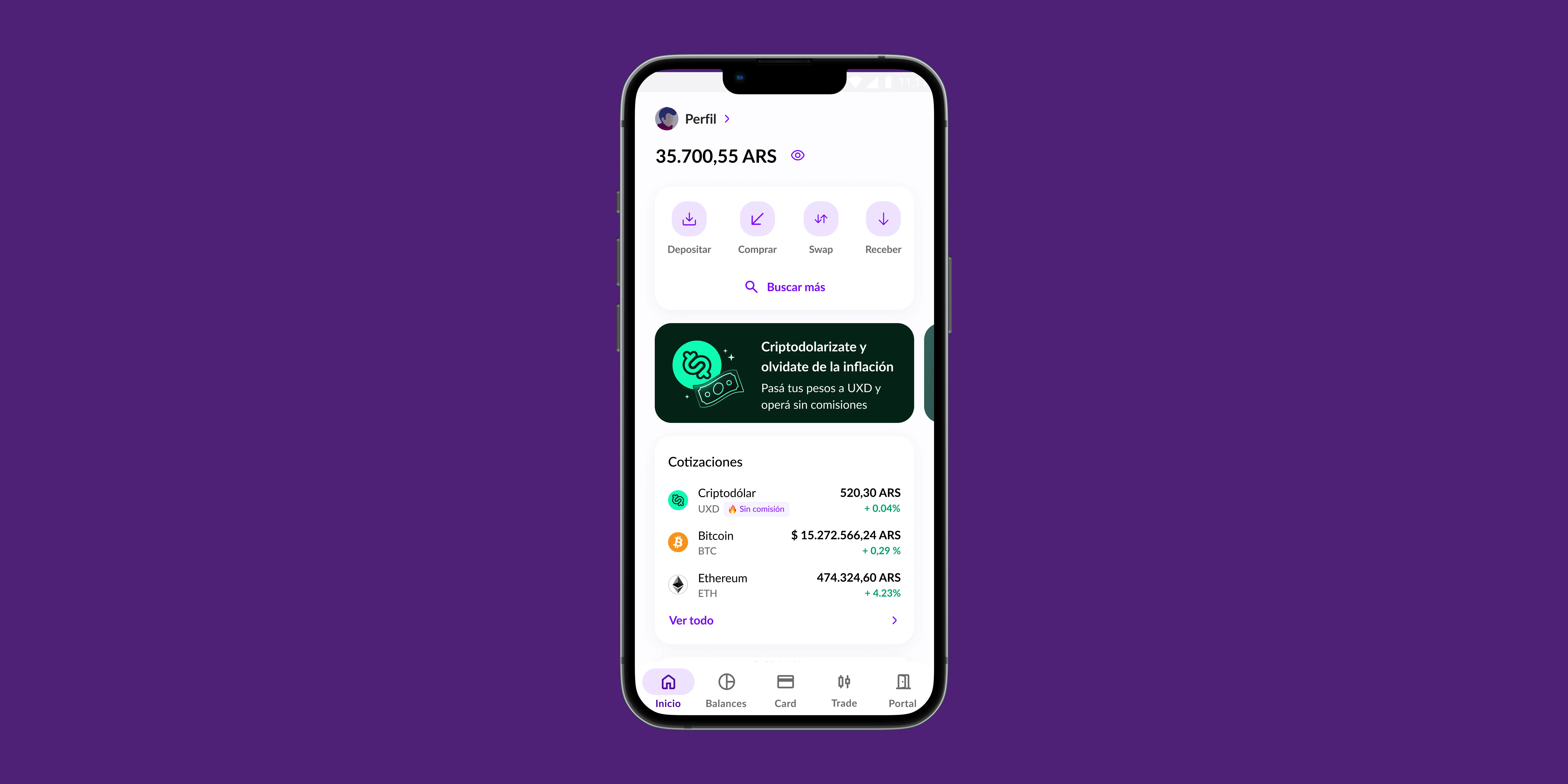
Home — Before · 2023
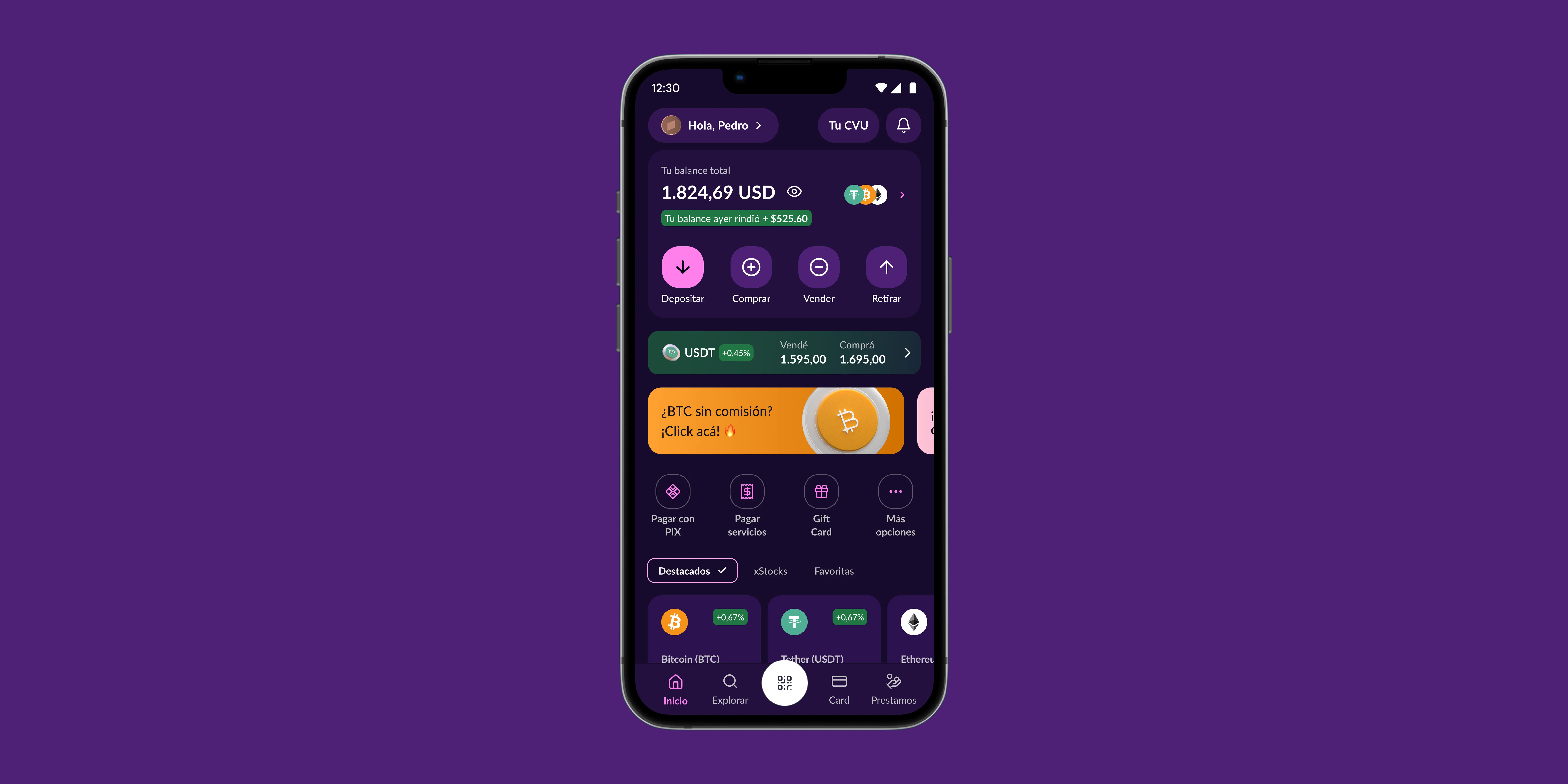
Home — After · 2025
The first shift wasn't a redesign — it was a process change. We introduced structured research into the cycle: Maze tests with real users, prototype testing before development, Amplitude analysis to understand drop-offs, and regular NPS + survey rounds. Design started having a seat at the table when prioritizing, not just at execution.
We also established a UX QA phase. Nothing shipped without design validation. That alone reduced the amount of "this got lost in translation" moments between Figma and production significantly.
A full app overhaul — from the home to the most critical user flows. Some highlights:
Redesigned information architecture. Quick access to the most-used flows and a clear portfolio overview for the user.
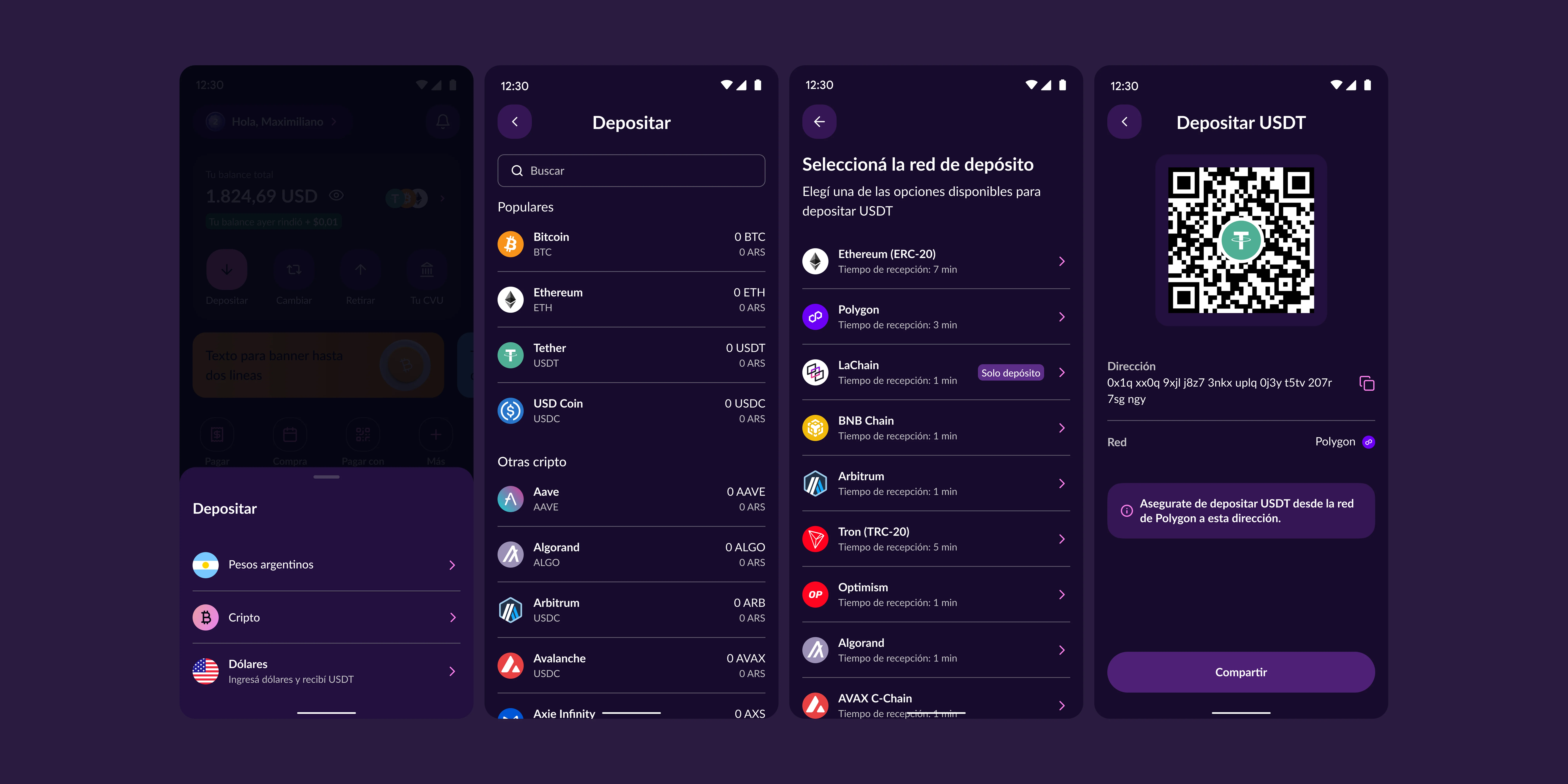
Simplified deposit and withdrawal flows. Reduced friction and steps needed to complete each operation.
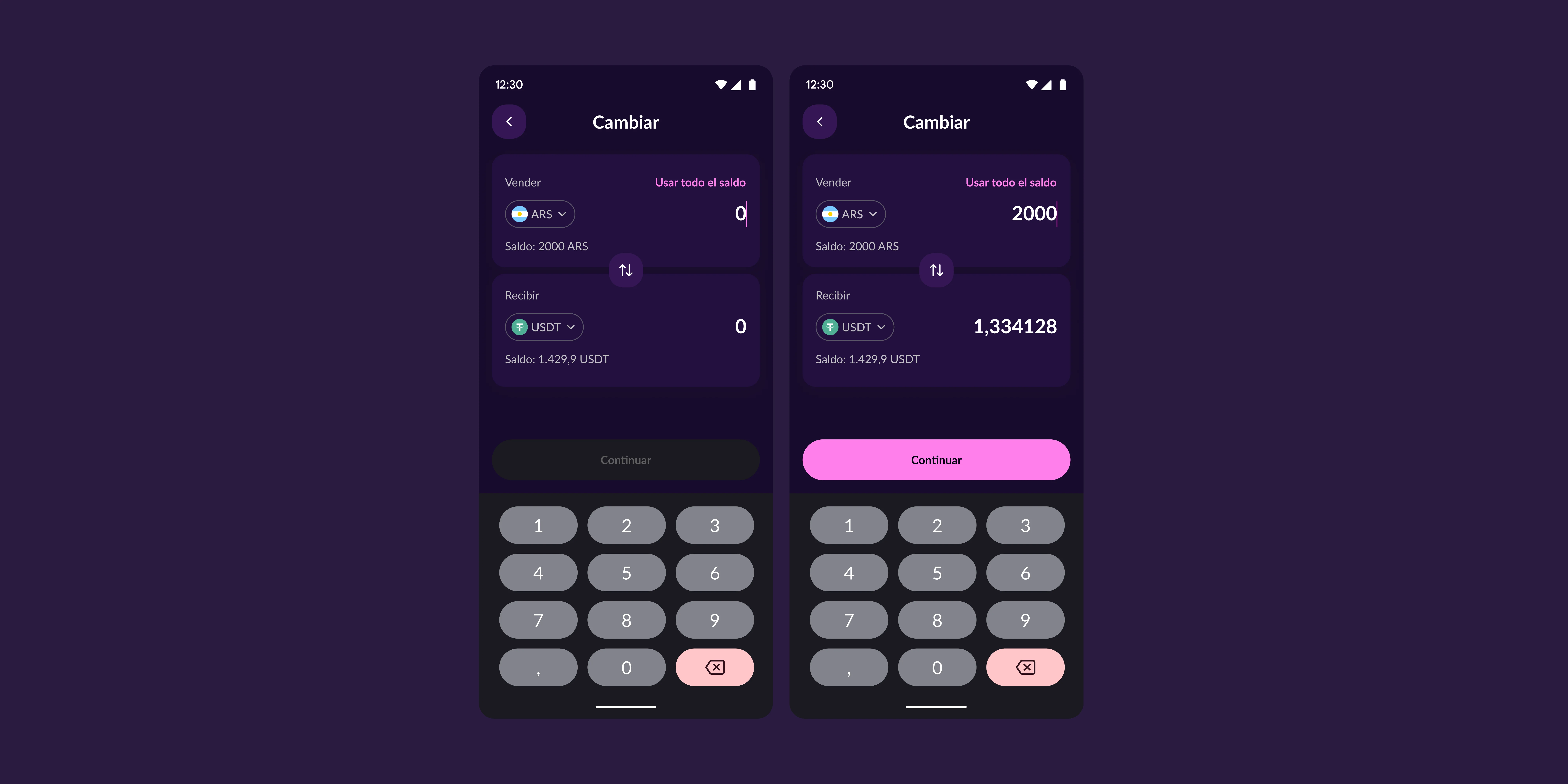
Redesigned the internal exchange. Cleaner, faster, with better status feedback at every step.
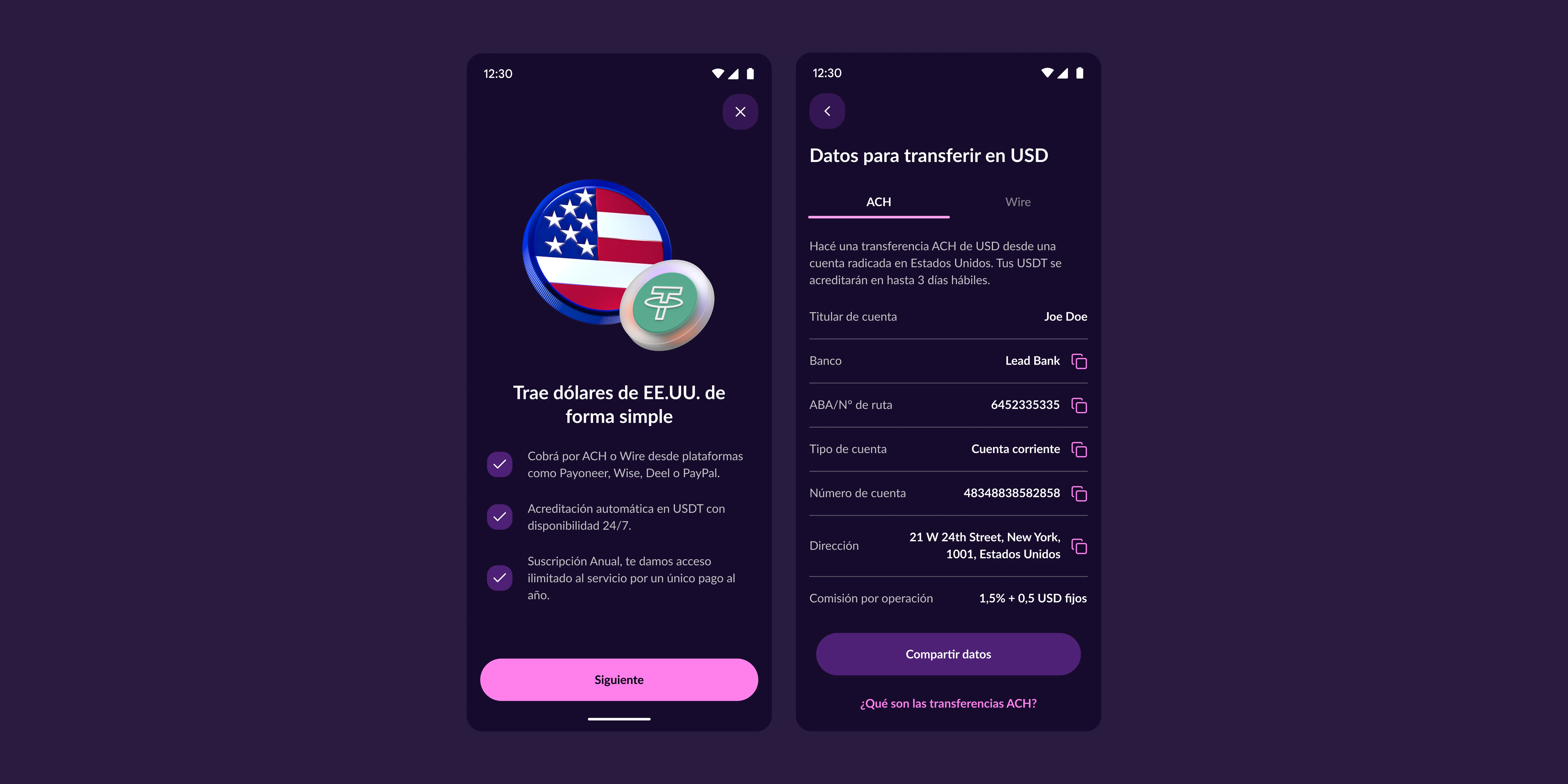
New product designed from scratch. Access to digital dollars with UX tailored for non-crypto-native users.
Redesigned asset visualization. More contextual information, improved charts and visual hierarchy.
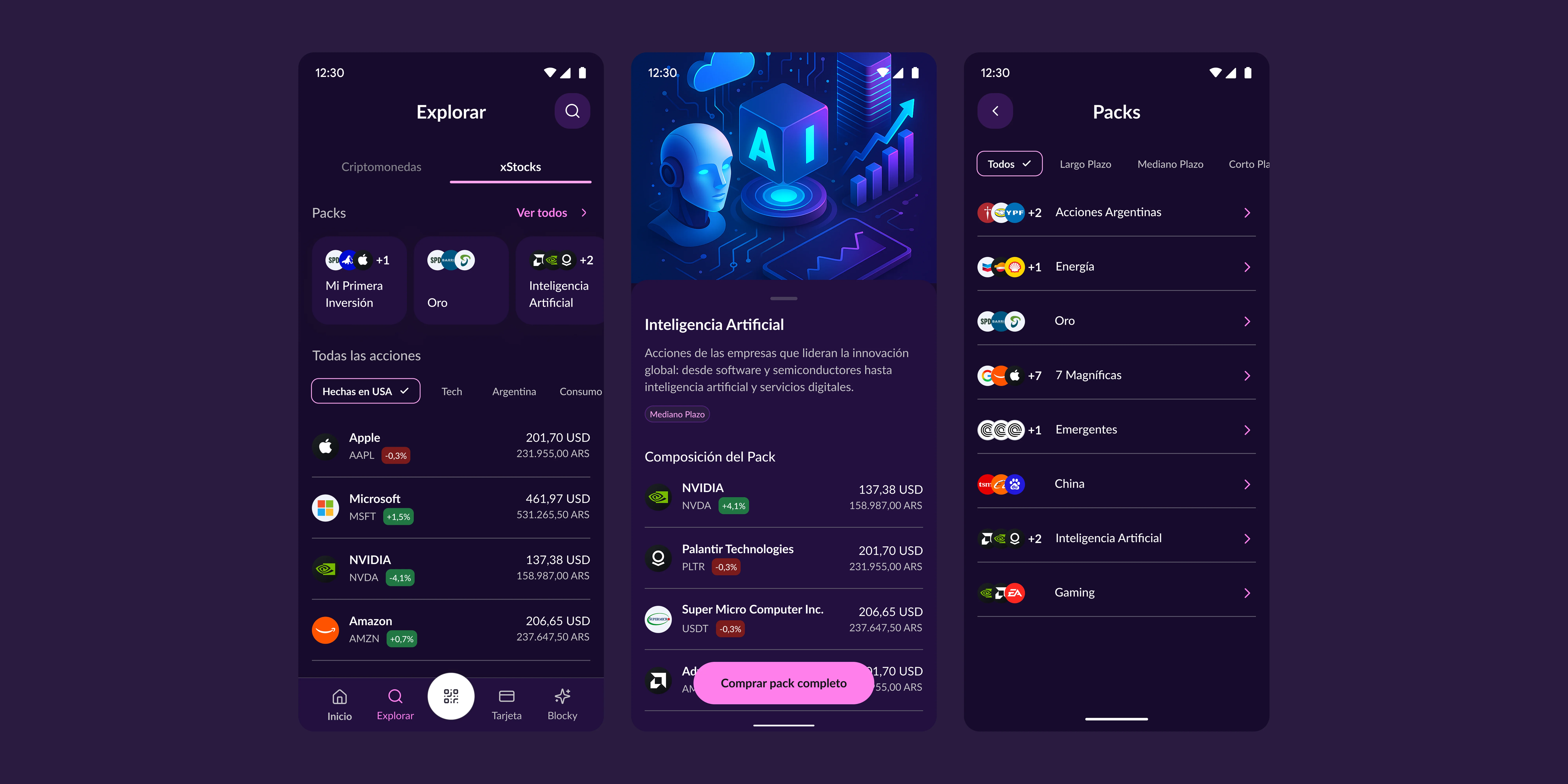
New tokenized stock investment module. Designed the full flow: discovery, purchase, and portfolio tracking.
Cash In
Swap
Dólares
xStock — Discovery & Purchase
The biggest change wasn't visual — it was cultural. Moving from gut-feel decisions to real user data changed how the entire team prioritized. Having a design-led QA process was what allowed quality to scale without relying on individual reviews. And building a design system in parallel was what made all of that sustainable.
NEXT PROJECT
Kavak Capital is the fintech arm of Kavak.com — Latin America's largest used car marketplace. The mission: give anyone access to car financing through a 100% digital experience, faster and with higher approval rates than any traditional bank.
When I joined as Product Design Lead for the Fintech vertical, nothing existed. No product, no design system, no established flows. My team of 3 designers built the entire experience from scratch — web and mobile — covering credits, insurance, and the early stages of the superapp.
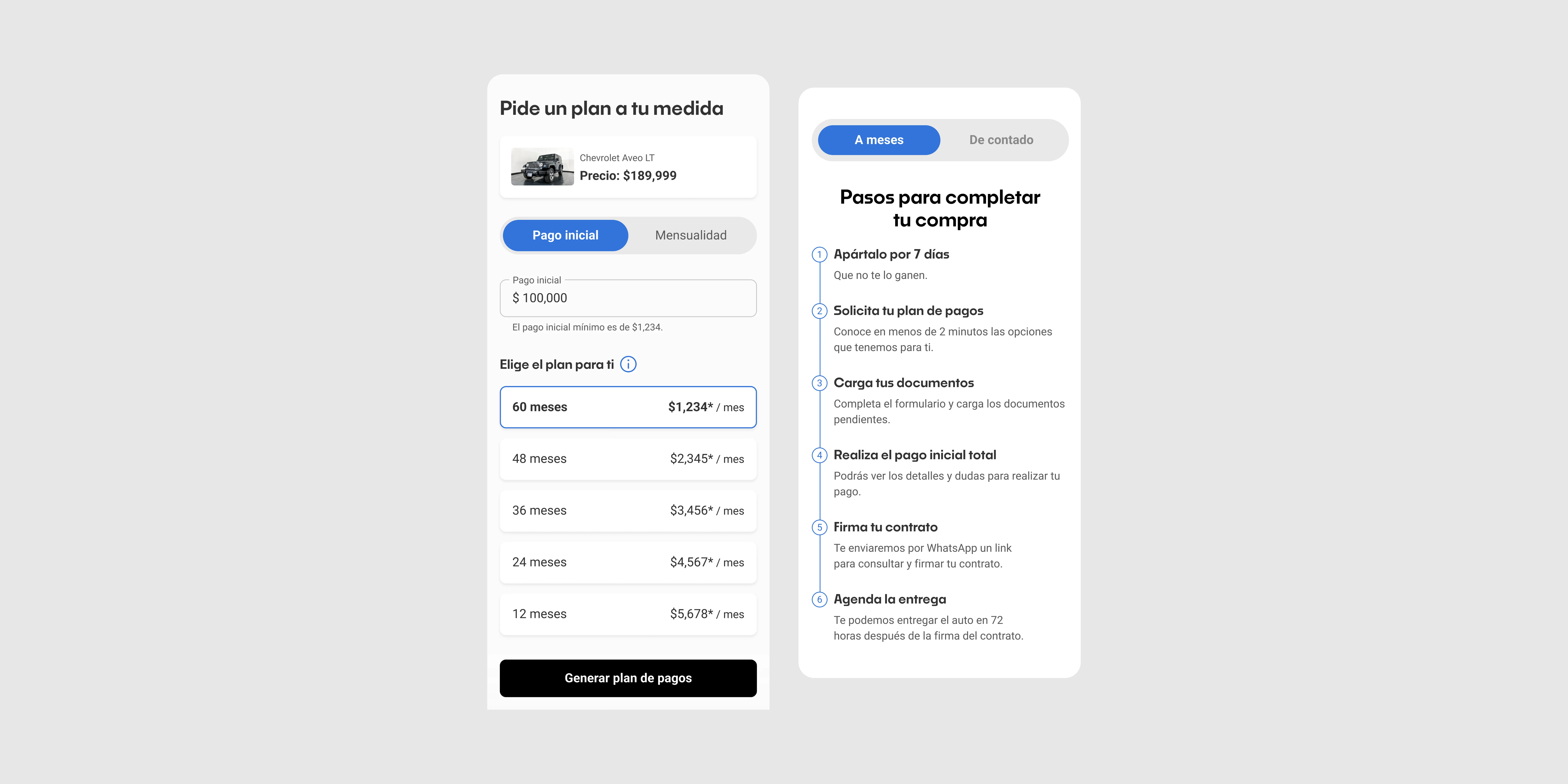
Credit Simulator
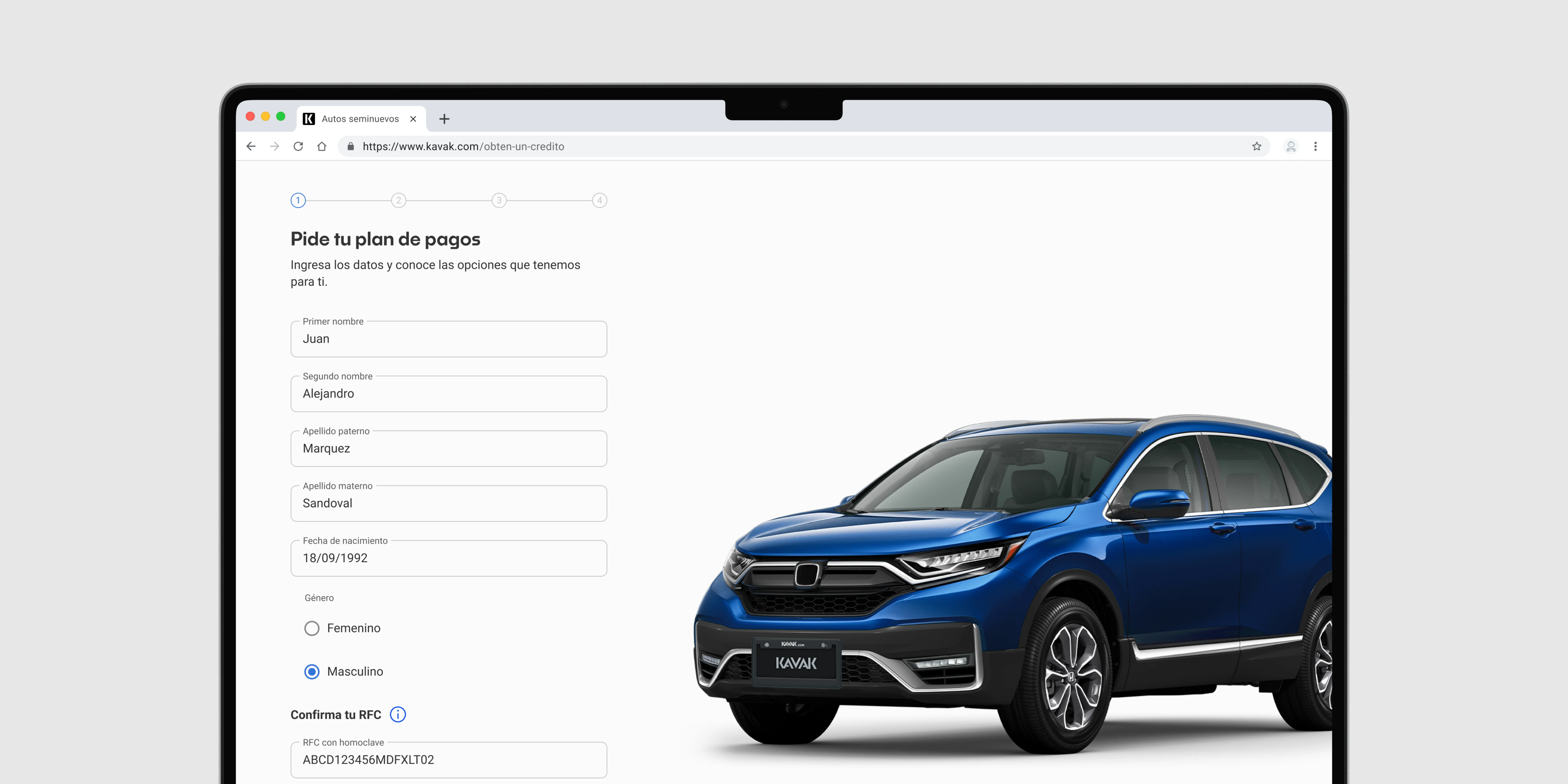
Onboarding & Buró de Crédito
The entire Kavak Capital product surface, end to end:
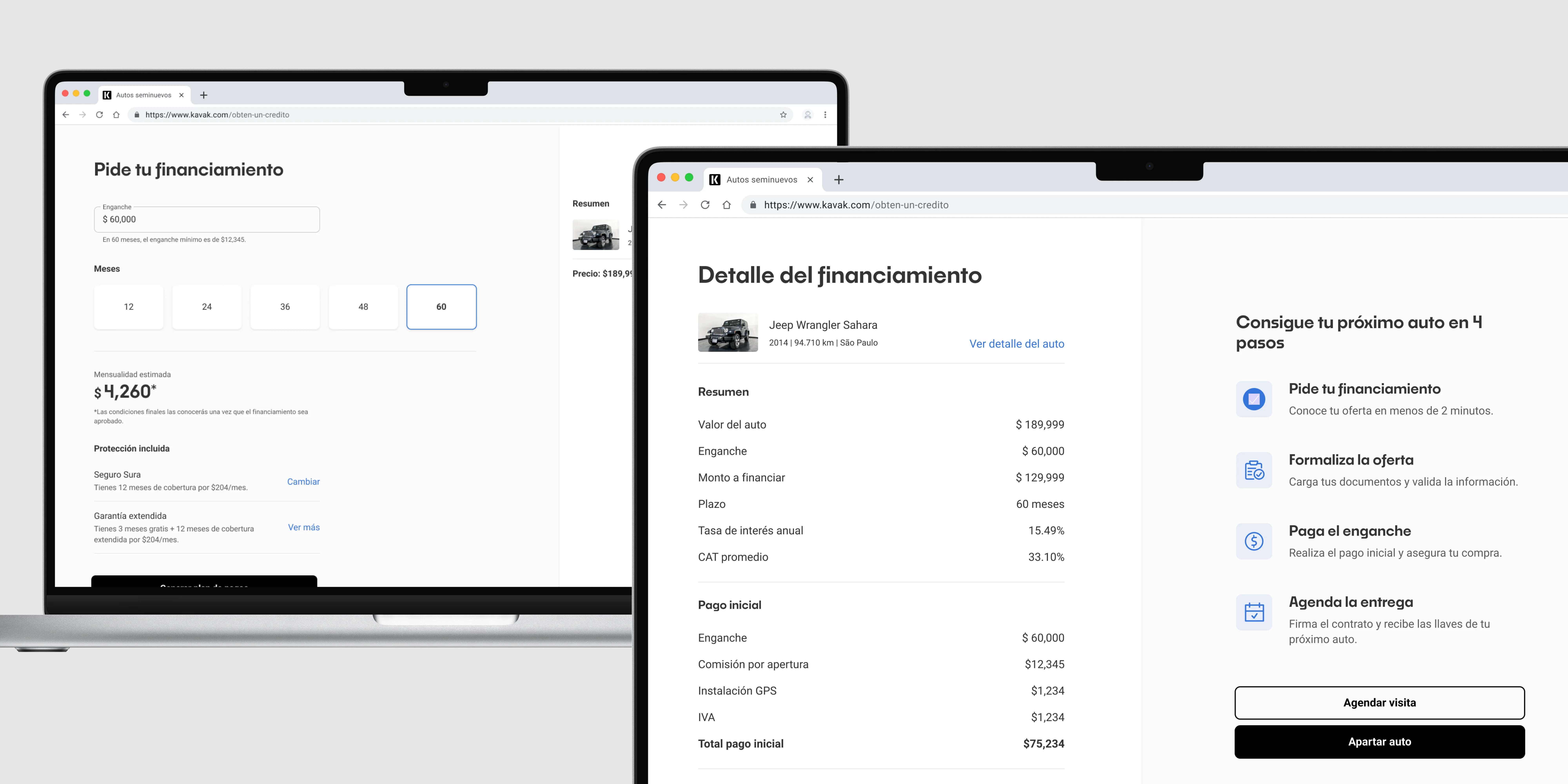
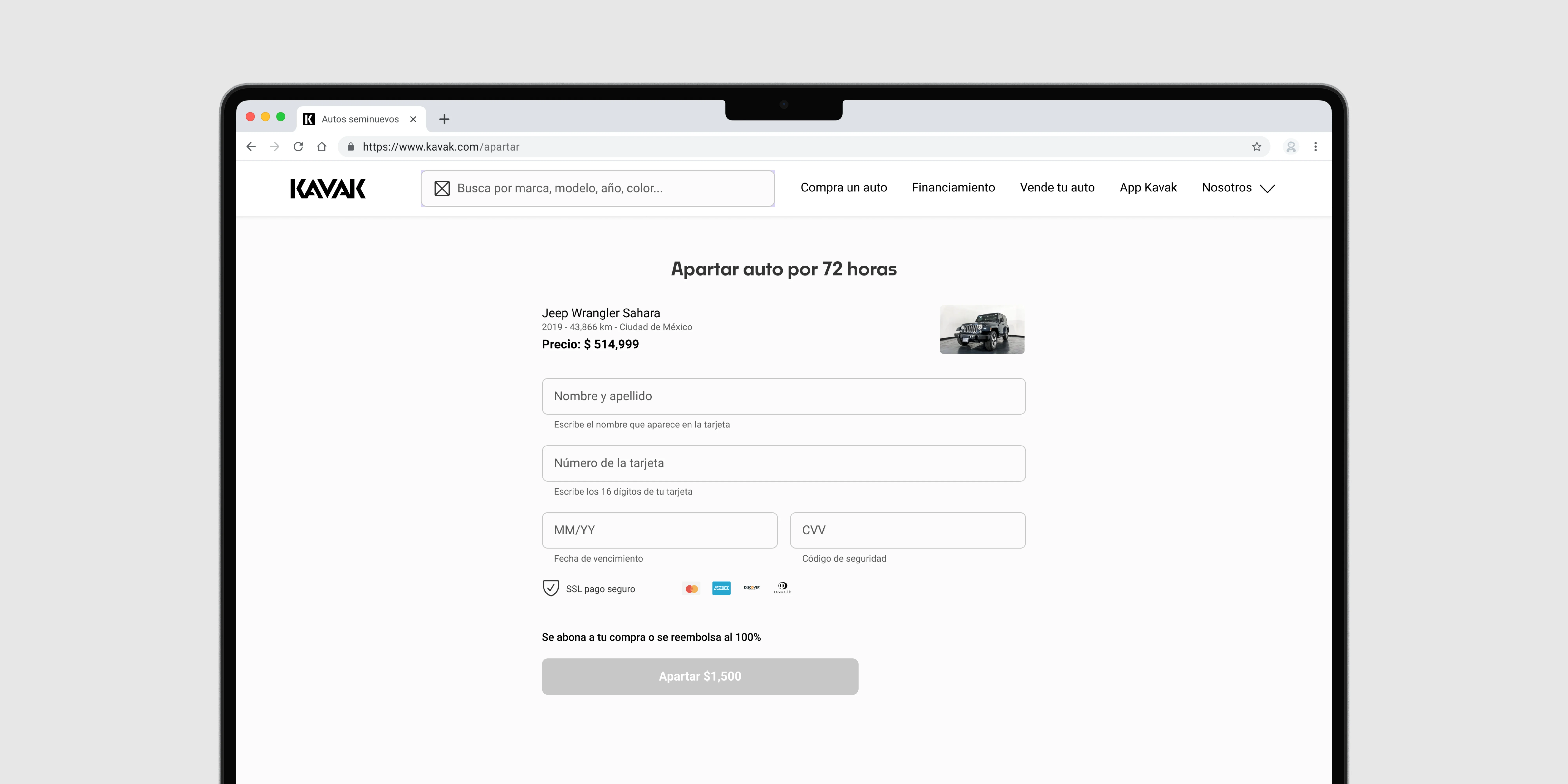
The core product. Users simulate a payment plan in under 2 minutes — choosing down payment, term, and monthly payment. Integrated insurance included. 80% of simulations convert with same conditions.
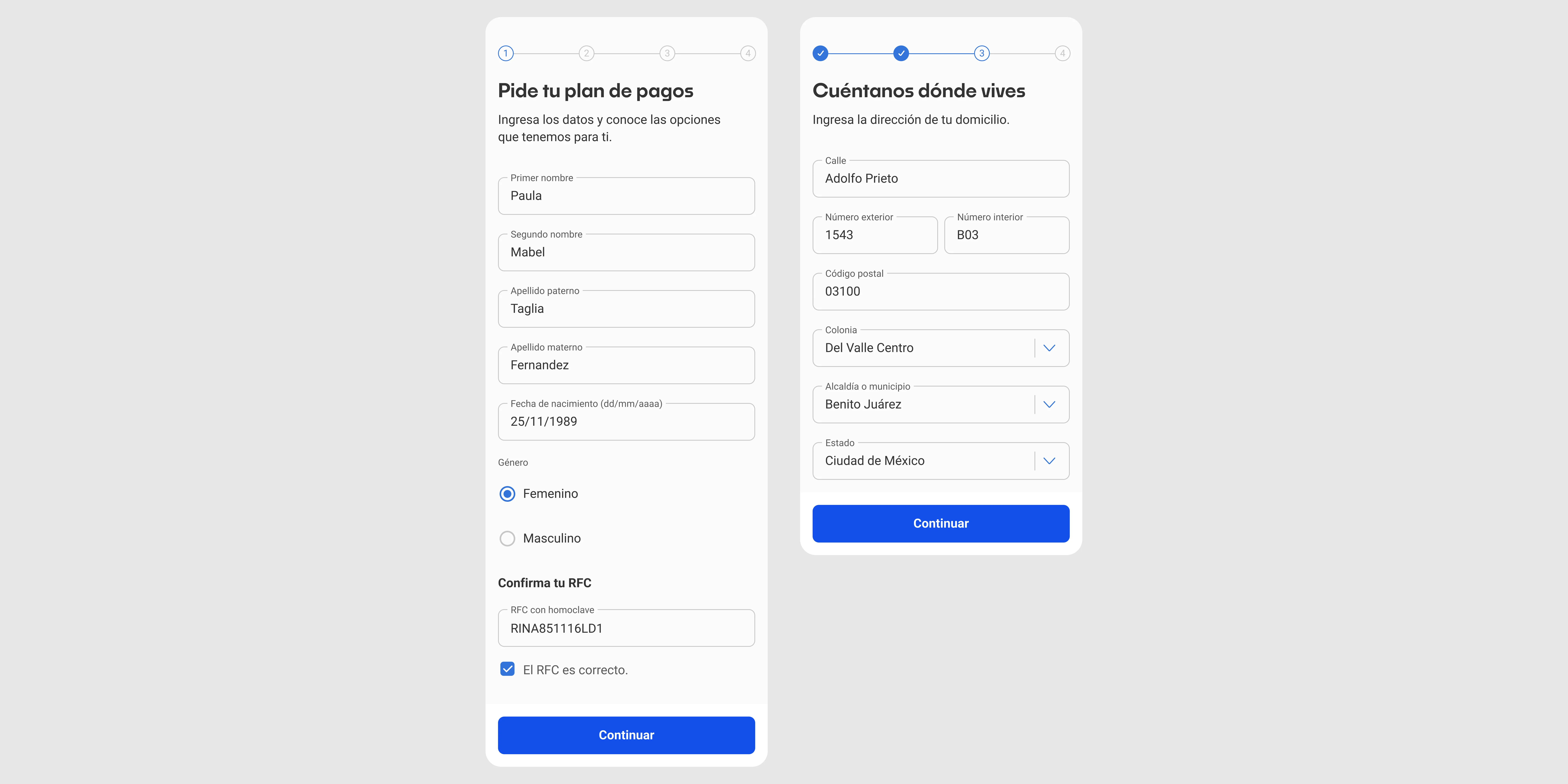
Full digital onboarding with Buró de Crédito integration. Identity validation, personal and employment data, document upload — all from the phone in under 5 minutes.
Car insurance embedded directly into the credit flow. Users see a single plan that includes vehicle protection — no separate product, no additional steps.
Marketing site and web app for Kavak Capital. Acquisition, simulation, and full credit application available on desktop and mobile web.
Native mobile experience for the end-to-end credit journey. Pre-approval in 1 minute, contract signing with facial biometrics.
B2B product allowing partner dealerships and banks to use Kavak Capital as a passthrough lender for profiles rejected by traditional banks. Broader approval spectrum, same digital UX.
Car financing is one of the highest-commitment financial decisions a person makes. Every screen had to earn trust while reducing friction — users needed to feel safe sharing sensitive financial and personal data through their phone.
Building 0→1 meant making foundational decisions early: design system, component library, tone of voice, information architecture. We ran constant user tests to validate assumptions before committing to development, especially around the credit bureau onboarding which was the most sensitive part of the flow.
Simulator
Buró Onboarding
Kavak Capital
Building from zero is a privilege and a responsibility. Every decision compounds — the design system you build in month one shapes everything that comes after. The biggest challenge wasn't the UX itself, it was designing for a highly regulated, trust-sensitive domain where users are sharing their full financial identity. Speed and simplicity had to coexist with rigor.
NEXT PROJECT
Naranja is Argentina's largest credit card issuer — bigger than any bank. But its core audience was underserved: people who needed credit and had nowhere else to go. Naranja X was the spin-off built to go upmarket and compete directly against Mercado Pago for digital-first users who expected more.
I was the second designer to join. Everything was built from zero — no product, no system, no established flows. My scope covered the areas users touch most: home, onboarding, profile, and the physical card itself. By the time I left, Naranja X had grown into one of Argentina's top two fintech platforms.
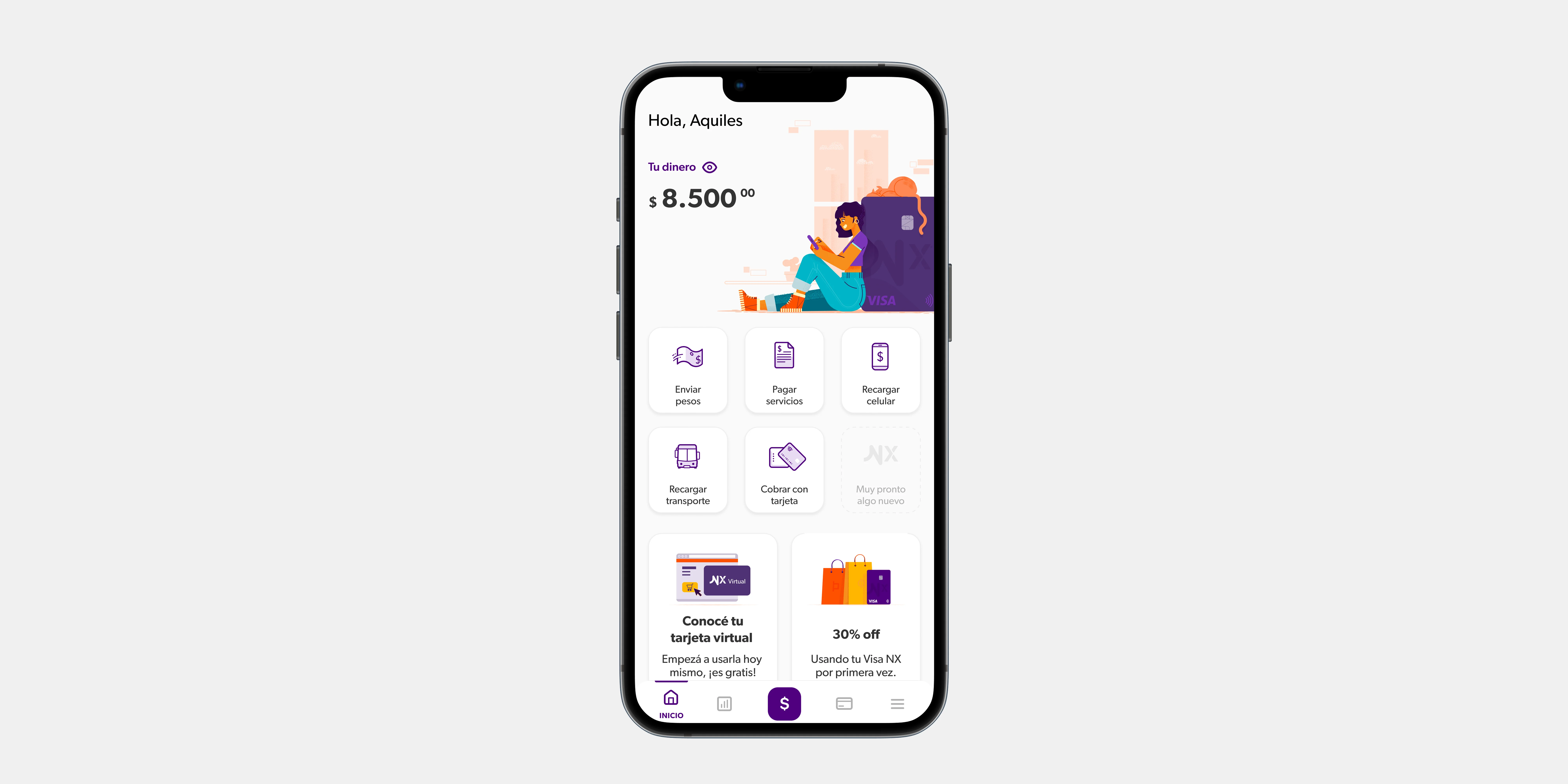
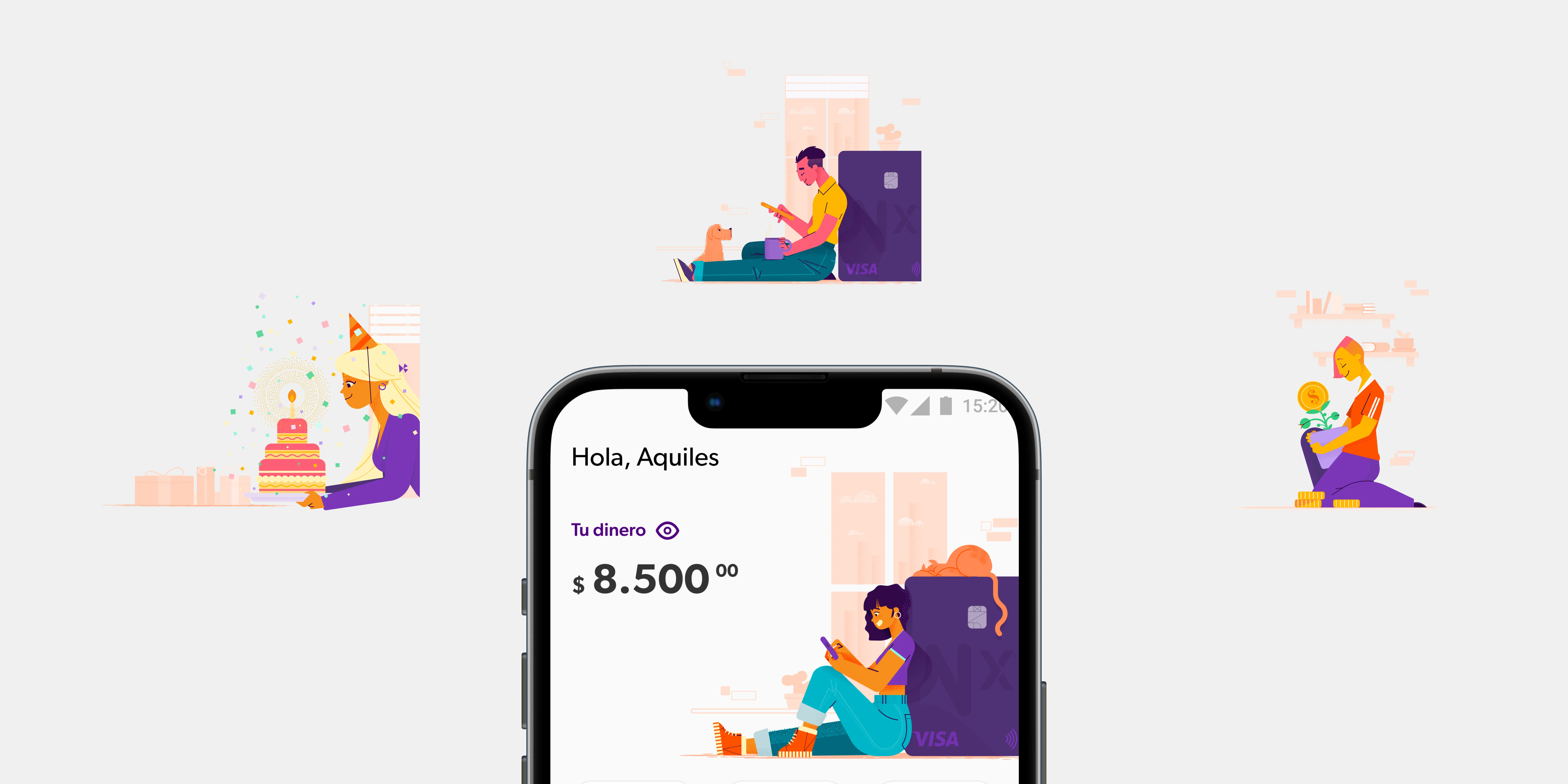
Home
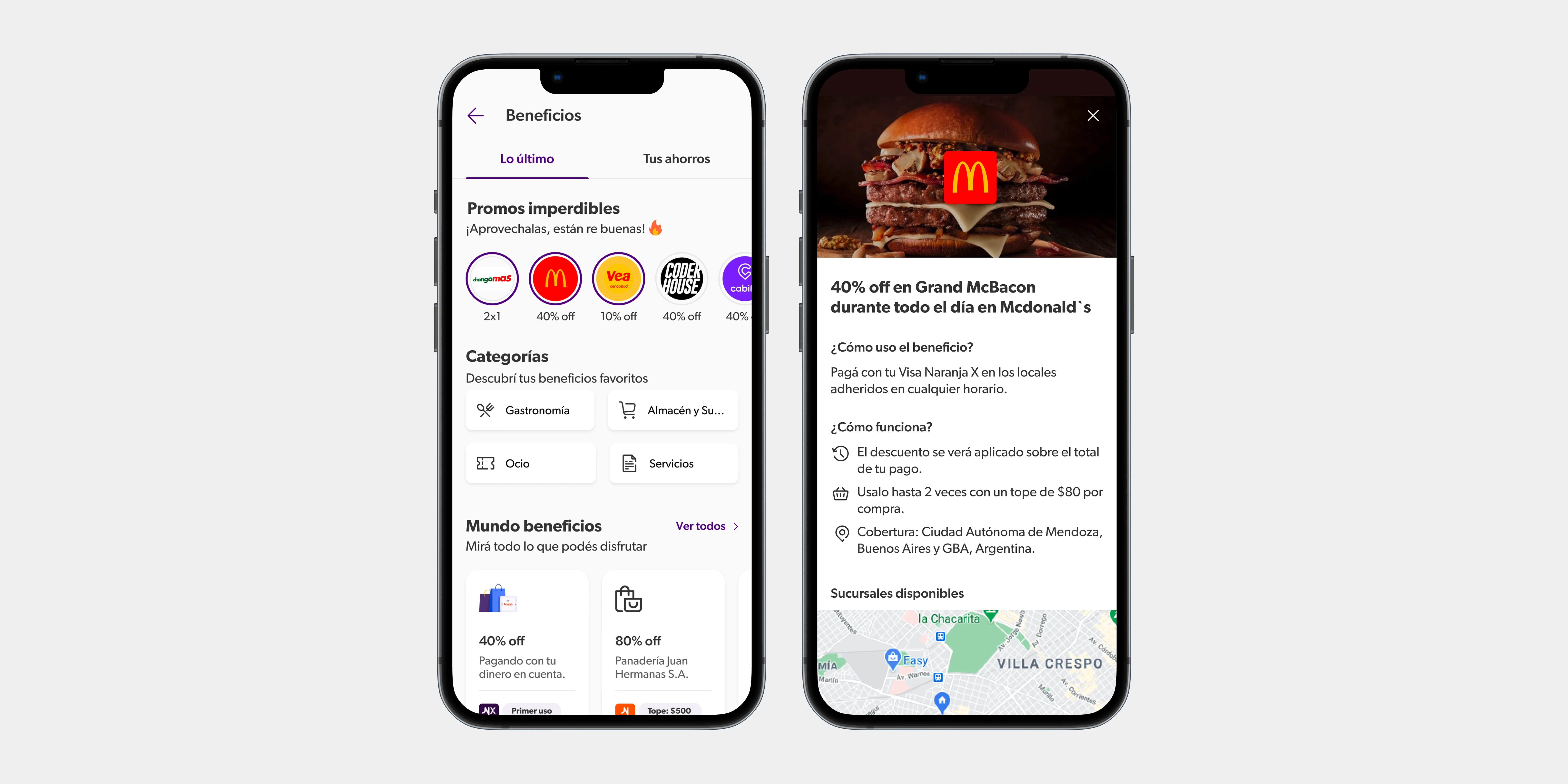
Promociones
Core product surfaces covering the full user journey:
Full identity verification flow from signup to active account. Designed to convert users quickly while meeting KYC requirements — reducing drop-off at the most critical step in the funnel.
Integrated FacePhi at a time when biometric onboarding was rare in Argentine fintech. Designed the UX around liveness detection — balancing fraud prevention with an approachable experience that didn't feel invasive to new users.
The most complex surface to design. The home evolved constantly — Argentina's economic volatility (cepo, dollar restrictions) forced repeated pivots in how financial data was displayed and what actions were surfaced.
Account settings, personal data, and preferences. Designed for clarity and security — users needed to feel in control of their financial identity without unnecessary friction.
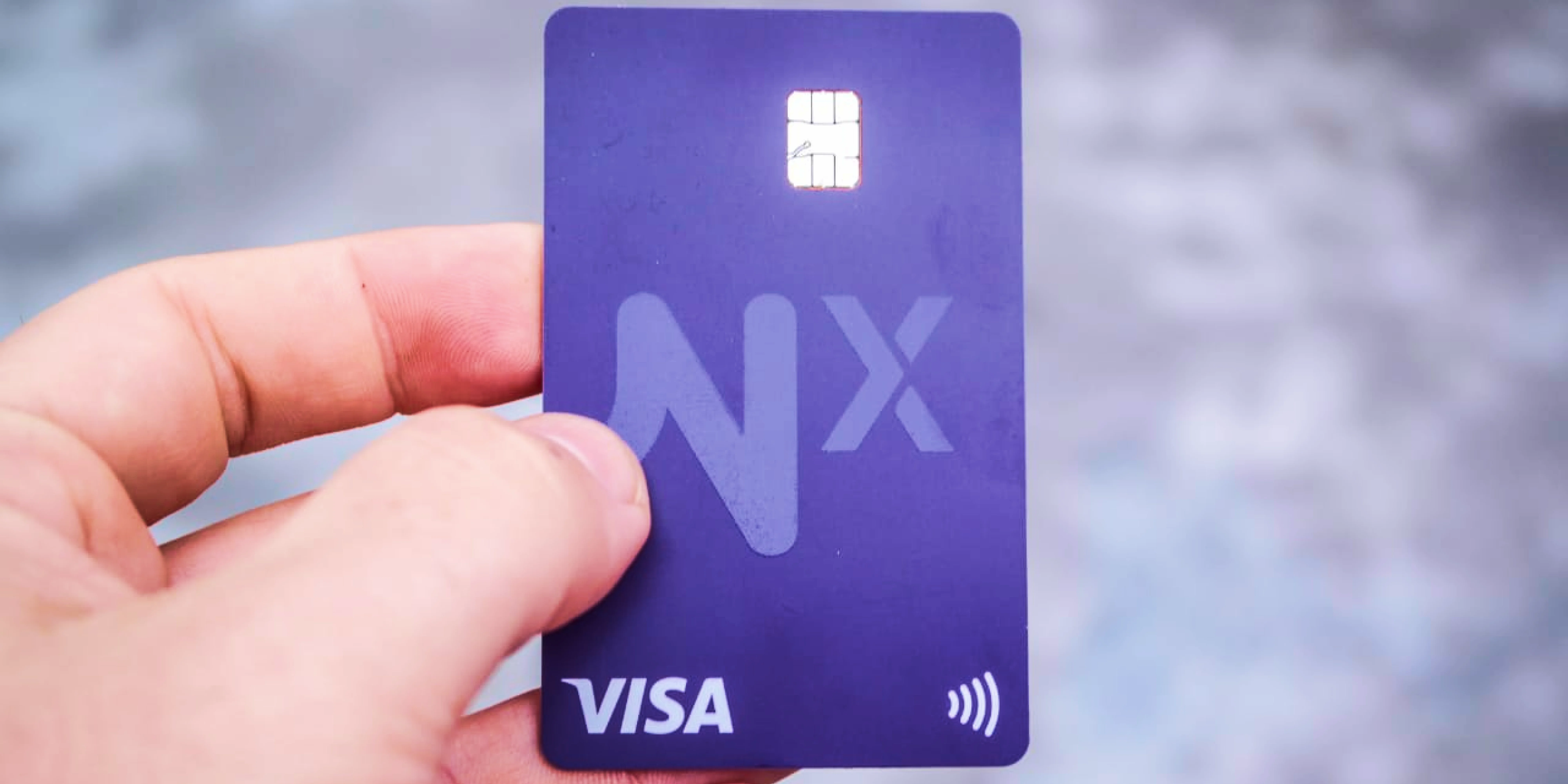
End-to-end card design in collaboration with Visa. Bridged the physical and digital brand — the card was both a product touchpoint and a marketing asset for a challenger brand entering a crowded market.
Argentina's shifting economic landscape required continuous product adjustments. Dollar restrictions and regulatory changes meant features had to be redesigned quickly — the product had to be fast to adapt without breaking.
Naranja X launched in 2019 — a year before COVID, in a country going through its third major economic crisis of the decade. Building a challenger fintech meant designing fast, shipping often, and constantly adapting to a market that changed week to week.
As one of the first designers on the team, I helped shape how design worked inside the company — shifting toward a product design model where research, prototyping, and delivery were all part of the same role. Every decision had to be grounded in user needs while staying nimble enough to pivot on short notice.
Ilustraciones
Tarjeta
Building a fintech in a volatile market teaches you that good systems matter more than perfect designs. Argentina's economic instability meant features had to be redesigned multiple times — a home that made sense in January could be wrong by March. The lesson: design for adaptability, not just the current state. The other big takeaway was that biometric onboarding, done right, is one of the most powerful trust signals a new financial product can have — but only if the UX makes users feel safe, not surveilled.
NEXT PROJECT
This case study is currently being written.
Check back soon.
This case study is currently being written.
Check back soon.